
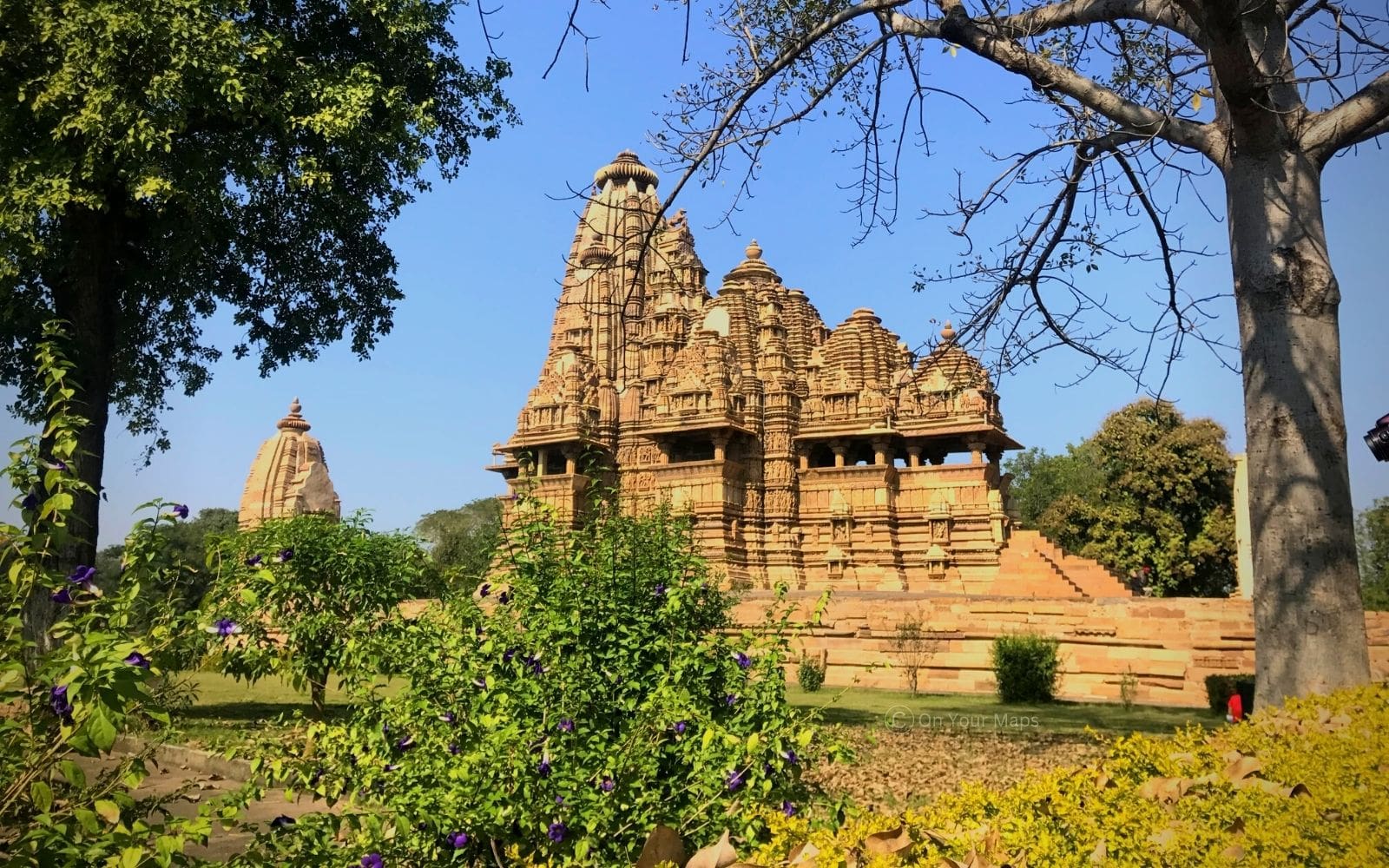
‘In a country full of temples, why do Khajuraho’s temples stand apart?’ I ponder on this thought later in this blog.
ON YOUR MAPS… GET SET… GO!! Let’s start this Khajuraho travel blog with some basic but important details about Khajuraho.
When, where or how did you first come to know about Khajuraho?
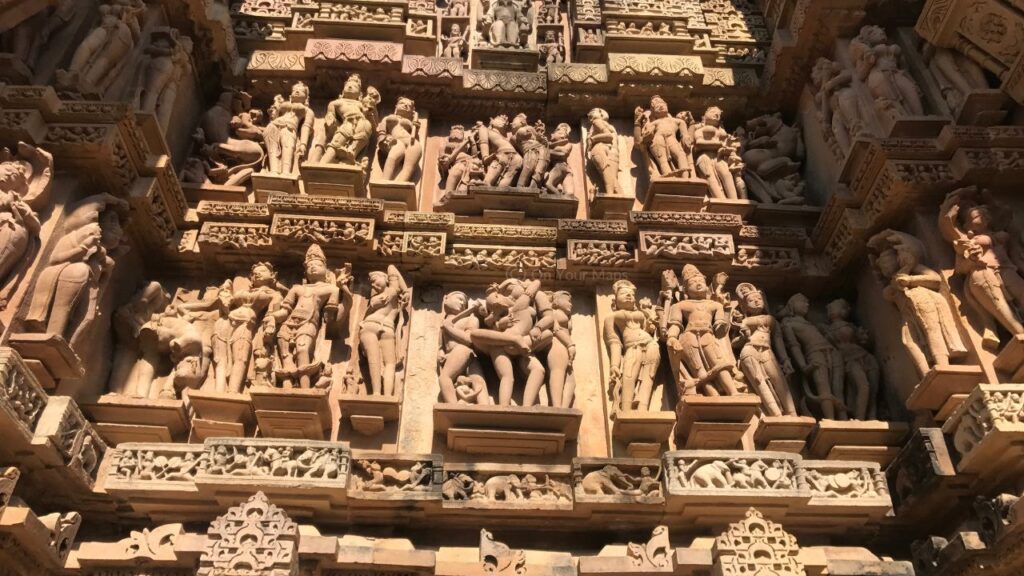
Chances are, either in the super-hit ad campaign of Madhya Pradesh tourism. (Remember- Hindustan ka dil dekho?), or you would have come across its world-famous erotic Kamasutra sculptures.
Whatever be your source of introduction to Khajuraho, if you are planning on visiting this marvellous temple-town, this travel blog will help you in your trip to Khajuraho.
Khajuraho travel blog
When I was visiting Khajuraho, I was surprised by the lack of information about it on the internet. From ‘Things to do in Khajuraho’ to ‘Best places to eat in Khajuraho’, there just wasn’t enough helpful information.
The fact that it is one of the top most visited sites by foreign tourists in India, was simply incomprehensible because of the dearth of good travel guides and travel blogs on Khajuraho.
And this is one of the main motivations for me to write this travel blog on Khajuraho.
Therefore, in this single travel blog, I will try to list out all the relevant information that may be helpful for you to plan a good Khajuraho trip.
Through this travel blog, not only will I list the ‘places to visit’, but also advice on the ‘places to avoid’, and what should be the range of budget for your trip to Khajuraho.
Why this trip to Khajuraho was special to me
My trip to Khajuraho in December 2020, was special in two ways.
Firstly, this trip broke the long pause of travel because it was my first trip after the outbreak of COVID. I hadn’t travelled since my solo backpacking to Egypt in February 2020. So, I was thrilled to be back on the road, after a dreadful 10-month of pandemic.
It was my second trip to Khajuraho though. Usually, I don’t repeat my travel destinations, but after months of lockdown, I was so desperate to resume my travels, that when my friends offered to go to Khajuraho, I agreed instantly.
This trip to Khajuraho was also special because it was my first trip after I finally decided to start a travel blog. Therefore, I travelled Khajuraho like a blogger – making notes of info to put in this travel blog, clicking enough pictures, keeping a tab on the expenses, etc.
First, some very basic information that you should know about Khajuraho
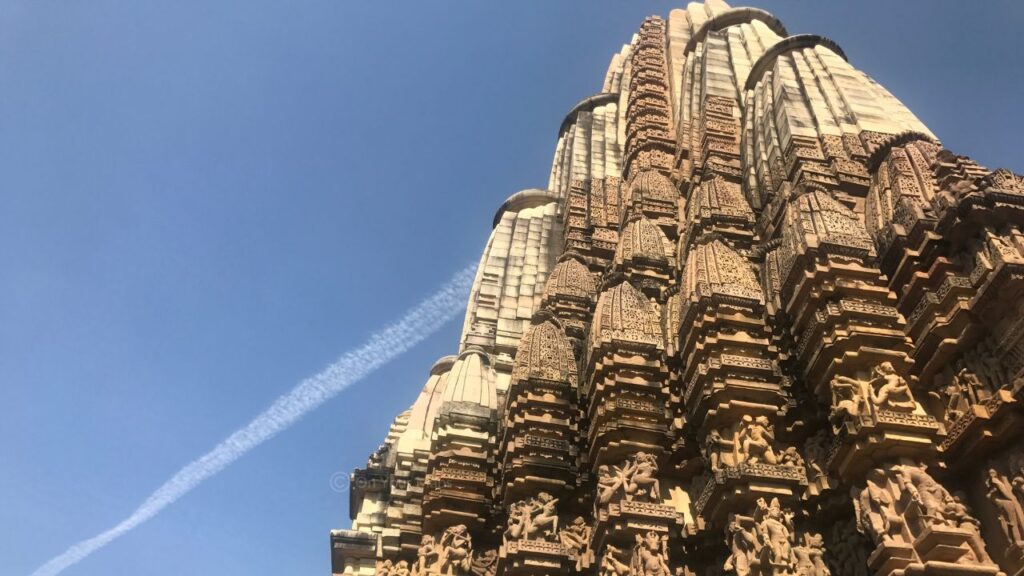
A UNESCO world heritage site, Khajuraho is a very tiny town, famous for its temples, that were built by the Chandela dynasty between 10th and 12th century AD. Presently, Khajuraho comes in the Chhatarpur district in the north of Madhya Pradesh, a state located in the centre of India.
What are the chances that you will like Khajuraho?
There is no denying the fact that Khajuraho is solely famous for its temple. But that doesn’t make it a pilgrimage or a religious place.
You may go there to marvel at the incredible ancient sculptures. You may go there to witness the times of ancient Maharajas. Or you may go there just for a fun weekend trip.
What is there in Khajuraho, besides the temples?
Even for a non-religious person (like myself), the trip to Khajuraho was an exhilarating experience. Besides temples and historical sites, there are a number of waterfalls and a safari in the nearby Panna Tiger Reserve.
How many days should be enough for Khajuraho?
Khajuraho can be a good weekend trip – where temples can be done on one day, and Panna forest safari and waterfalls can be done on the other.
But I feel this can be exhausting if you are visiting Khajuraho from a faraway place as the fatigue of long distance travel will add on to the rush of finishing it in two days.
If you are not someone who travels in a haste, and prefers to take it easy, then an extended weekend or a three-day trip is ideal in my opinion.
What is the best time to visit Khajuraho?
DO NOT even think about going to Khajuraho in the summer. It is blazing hot. And when the stones of the temple reflect the sun’s heat, it becomes unbearably hot. So avoid the peak summer from April to mid-June.
(It was the month of May, peak summer, when I first visited Khajuraho, in around 2010. It became an unforgettable trip, but in a bad way. All I remember about it is the sweltering sun and nothing else)
In winters, days are pleasant but the night becomes really cold. Khajuraho becomes one of the coldest places in the plains during December and January.
Monsoon is an admirable time to visit Khajuraho. The waterfalls return to their full glory then.
So overall, mid-June to November and February-March are the best times, weather wise, to come to Khajuraho.
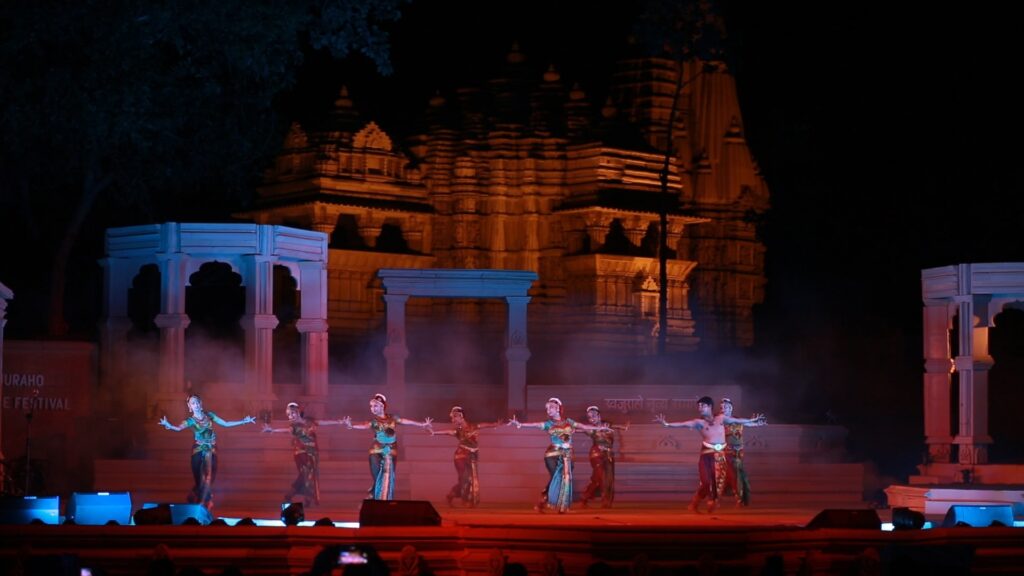
But if you ask me to select THE BEST time from the above, then hands down it is during the Khajuraho Dance Festival. The festival occurs in February every year, and is one of the most prestigious and renowned cultural events in India. Renowned dancers as well as dance lovers from across the world gather in Khajuraho to attend the iconic event that showcases Indian classical dance forms in the backdrop of the beautifully lit temples of Khajuraho.
What is the best way to reach Khajuraho?
Located in north Madhya Pradesh, Khajuraho is a very small town, semi-rural in nature. But being a major tourist destination, Khajuraho is not a remote place to visit. (Honestly, it is not that well connected either)
Reaching Khajuraho by car
If you ask me, Khajuraho is an ideal destination for a road trip. Why? Because you pass through beautiful countryside, rivers and farms. You stopover at highway dhabas with good food. And the roads are also fine. What more do you need for a road trip?
(Yes, this is how I reached Khajuraho – via car, with friends)
Reaching Khajuraho by flight
Thanks to its global recognition, Khajuraho has its own airport, despite being a tiny hamlet with a population of only about 25,000.
However, the connectivity of the airport is limited only to Varanasi and New Delhi (as of 2021).
Reaching Khajuraho by train
Similar to its airport, Khajuraho’s railway station too has very limited connectivity. The only train with direct link to Delhi is UP Sampark Kranti Express. Others are mostly passenger trains that connect Khajuraho with nearby stations in Madhya Pradesh and Uttar Pradesh.
The nearest major railway station to Khajuraho is Satna – 130 km away. It is well connected to other parts of the country.
Mahoba railway station, though less connected than Satna, is also preferred by many as it is only 60 km away.
Reaching Khajuraho by bus
Khajuraho is connected via bus services from cities like Jhansi, Satna, Chhatarpur, Mahoba, Jabalpur, Bhopal, Indore, Gwalior, Panna, Agra, Allahabad and Varanasi. Both AC and local passenger buses ply here, but the comfort or even safety of the buses are not guaranteed.
Where to stay in Khajuraho?
The only thing in Khajuraho that is more in number than temples is hotels. Kidding! But yeah, Khajuraho has ample hotels, and for every kind of budget.
From luxury 5-stars of big chains to backpacker hostels, homestays, lodges and budget hotels, you can find all kinds of accommodation here.
Hotels are scattered all around Khajuraho. So locality-wise, there are two options – either you can stay closer to the western group of temples i.e. the centre of the city with the main market; or you can choose from the hotels that are located at some distance.
Frankly, it would not make much difference wherever your hotel is, because you will anyway need a vehicle for visiting the attractions as most of them are situated at long distances from each other.
How I managed to get a cheap deal on my hotel?
Because there are so many options for staying in Khajuraho, there is a chance that you may face a hard time selecting the hotel with the best value for you (paradox of choice!). That’s why let my travel blog explain you how we dealt with this situation in Khajuraho.
So as per our budget, we shortlisted some hotels online. When we reached Khajuraho, we began visiting these hotels. This is better than directly booking a hotel online as hotel rents are flexible and negotiable when you deal with them face to face.
After checking a handful of hotels, we finally checked into a hotel that gave us a better discount.
(Full disclosure: One of the main reasons why we got a good discount is because hotels were desperate to receive customers. Things were just opening up after the COVID lockdowns and we were in a better position to negotiate)
How to get around in Khajuraho?
As noted earlier in this travel blog, temples and other sites like waterfalls are spread across Khajuraho. Therefore, you will need a vehicle to commute around.
If you don’t have a conveyance of your own, then there are three options for you —
- Simply hire a cab / taxi. This is the costliest option though.
- Hire an auto-rickshaw / tuk-tuk for a full-day. Negotiate smartly.
- Rent a bike or a scooter and go wherever and whenever you want. I think you can find two-wheeler rentals in the main market.
Vibe in Khajuraho
A really small town that sees more tourists in a year than its total population, Khajuraho is a textbook example of a ‘tourist-town’. All the things, from local businesses to jobs, are focused on catering to tourists.
The visitors are enthralled by the all encompassing ‘touristic’ vibes here. Even if you have come here for just a couple of days, the vibe here will actually give the feeling that you are on a relaxing getaway.
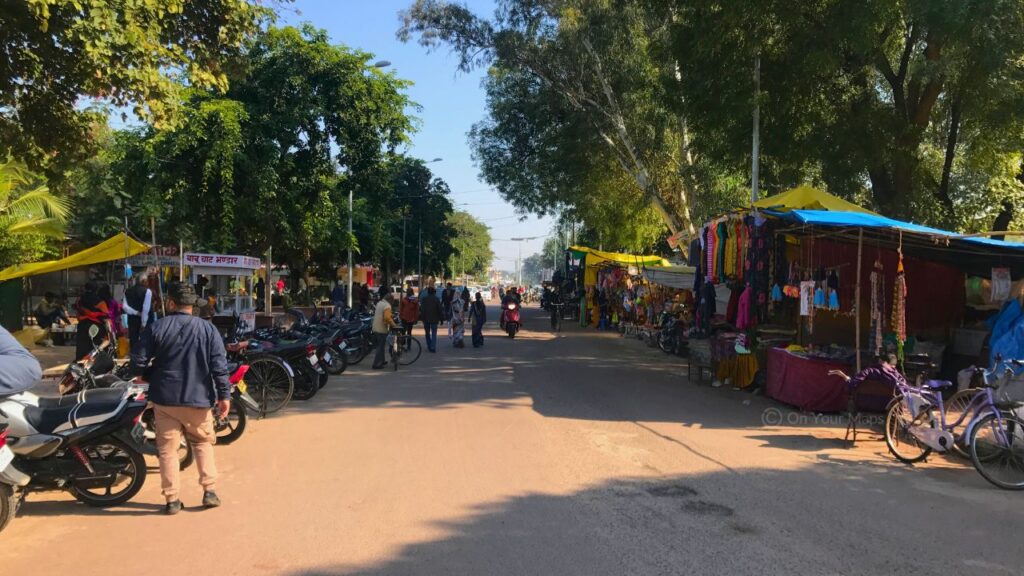
The atmosphere in general is laid back and chill; people are generally welcoming, but…
Warning! Beware of thugs and bargain like anything
All touristy places in India are infamous for their scamsters, and Khajuraho is no different.
Outside the temple complexes, beggars, salesmen and all kinds of people will surround you to get money out of you. From fake ticket sellers to fake guides, you will have to wade through different kinds of frauds.
When hiring a guide, make sure the person is a registered / verified guide. The authentic guides can be found close to the ticket counter at western temples complex.
Beware of the fake ones. There are several other unregistered ‘guides’ who roam around the city and offer their services at a lower price. They are just local imposters who pretend to be ‘guides’. They lack required knowledge of a guide and often give wrong information.
You will have to be extra careful if you are a foreigner, because international tourists tend to get more hounded. They try to take advantage of foreigners’ vulnerability.
Let me share our experience of getting ripped (so that you are more aware):
When we came out of the temple premises, a shopkeeper insisted on visiting his shop. We made it clear to him that we are not interested in buying anything. But he kept on asking us to just visit his shop and not buy anything. Out of pity, we gave in to his unrelenting insistence.
When we went inside his shop, he showed us different items, saying that they are made of local fabric which can’t be found anywhere else (he was lying) and we should get a local-made gift for our family.
We bought a kurta eventually. But it was clearly a trick to thug the tourists.
If you are really interested in buying something, then negotiate to unrealistic levels. Otherwise they will just rip you. For example, we bought an item for Rs 80, for which the original quoted price was about Rs 400-500. (This mainly applies to antiques, souvenirs and clothes)
Now that you are handy with all the basics, let us get into the meat of the matter and start with the real information in this Khajuraho travel blog.
What are the best places to visit or best things to do in Khajuraho?
Visit the temples in Khajuraho (not all of them though)
Where to start your Khajuraho sightseeing, if not from the iconic temples itself?
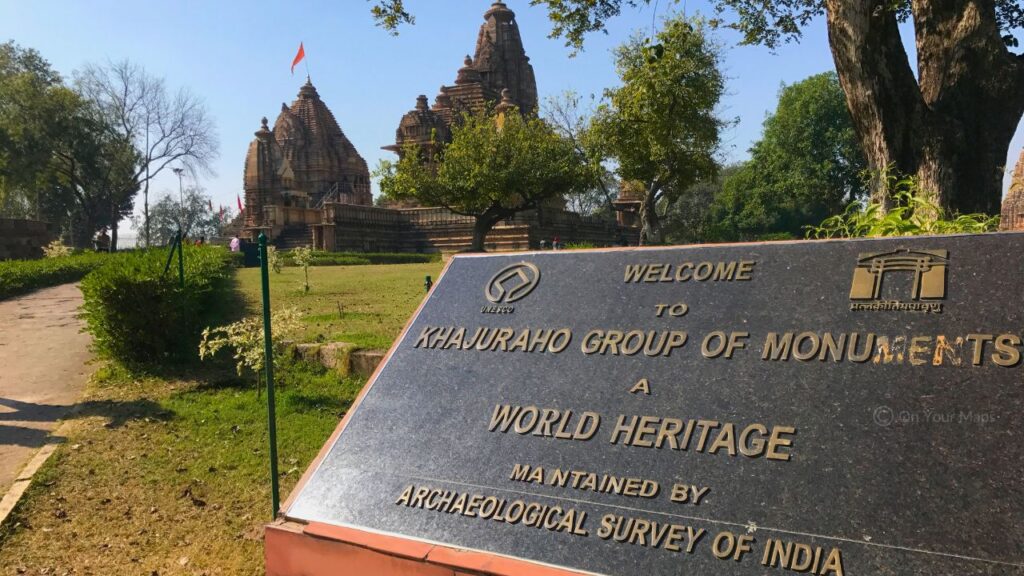
Before my travel blog tells you how to go about the temples in Khajuraho, it will be good to know their brief historical significance.
The temples in Khajuraho are about a thousand years old. Originally, there were 85 temples, but only 20 could survive the test of time and attacks of invaders.
After being neglected for centuries, it was only in 1850 that the Khajuraho temples were rediscovered.
These temples got global recognition for its intricate stone-carvings, most popular of them being the erotic postures of Kamasutra.
The sexual art, although comprise only 10% of the temples’ chisels, overshadows the rest 90% of the sculptures that show other aspects of the life during that period, like meditation, dance, spirituality, kinship, etc.
Now that you have some knowledge about the temples, the next question is— where to start your temple-hopping?
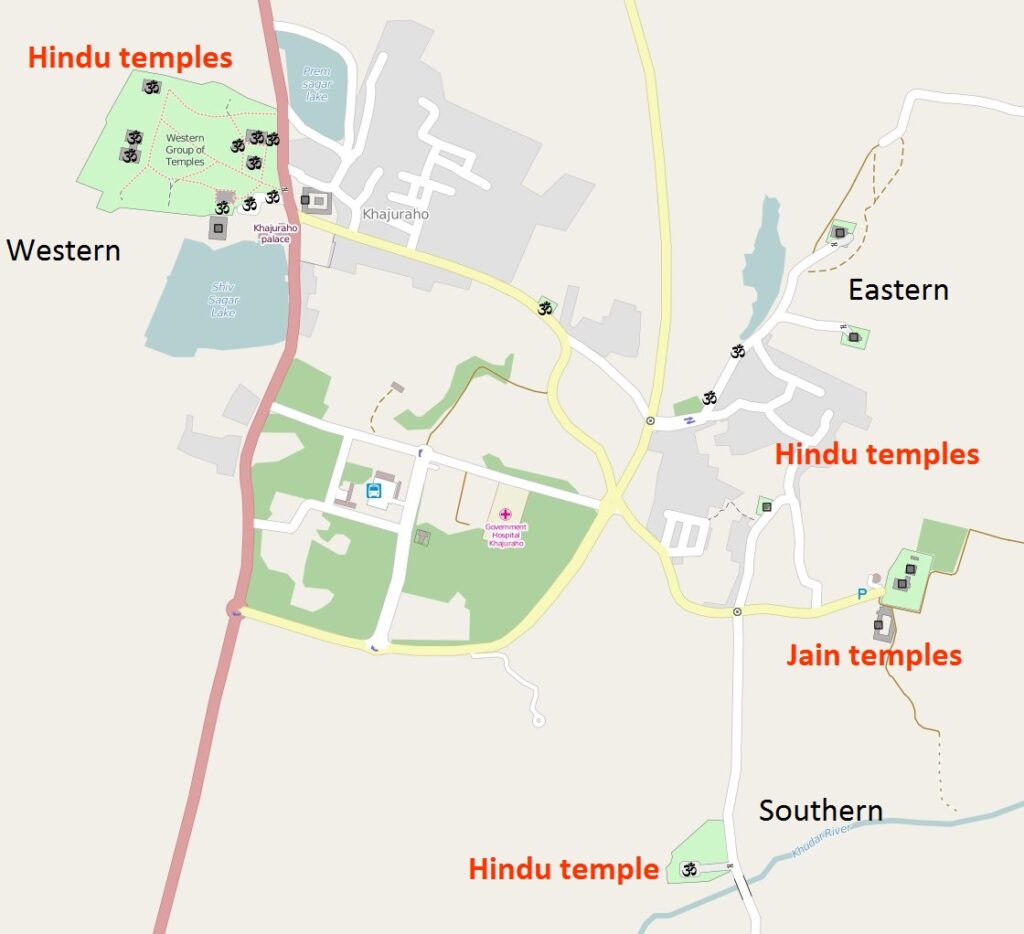
On the basis of the geographical location of the temples, they are categorised into three groups: Eastern, Western and Southern.
Western group of temples
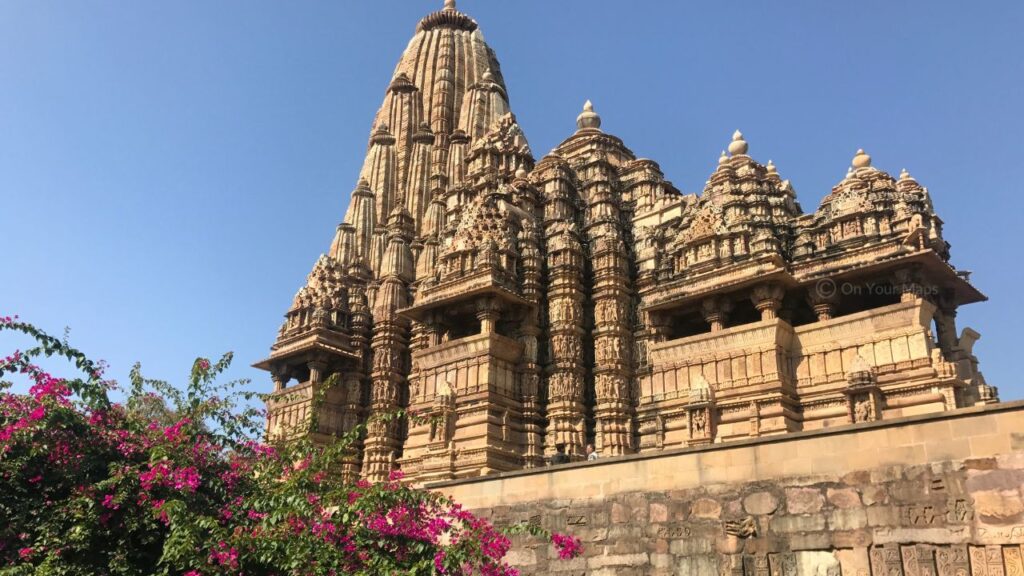
The best among them are western group of temples, which are essentially a cluster of temples that are located in a single premises, surrounded by picturesque gardens.
Western group of temples is the main attraction of Khajuraho. That’s why I consider it the ‘main’ group of temples. That’s why the western group of temples is the ideal place to start your sightseeing in Khajuraho.
The list of temples in the west include Lakshmana temple, Vishvanath temple, Kandariya Mahadev temple, Parvati temple, Jagdambi temple and Chitragupta temple.
Due to the damaged sculptures, all of the above temples are devoid of religious offerings and prayers. Only the Matangeshvara temple, just next to the Lakshmana temple, is used for worshipping.
If you are hiring a guide (which you must, for a wholesome experience) then the tour of the western temples complex would take about 2-3 hours.
If you don’t want to avoid a human guide then you can opt for audio guides.
The entry ticket to western group of temples is Rs 40 for Indians and Rs 600 for foreigners (as of 2021)
Chausath Yogini temple
Not part of the Western cluster of temples but close to the temple complex, lies the Chausath Yogini temple. This is not exactly a temple, but rather the remains of a ninth century temple.
This site possesses a great sunset view, with a panoramic view of the Western temples and the Shivsagar lake on the side.
Southern group of temples
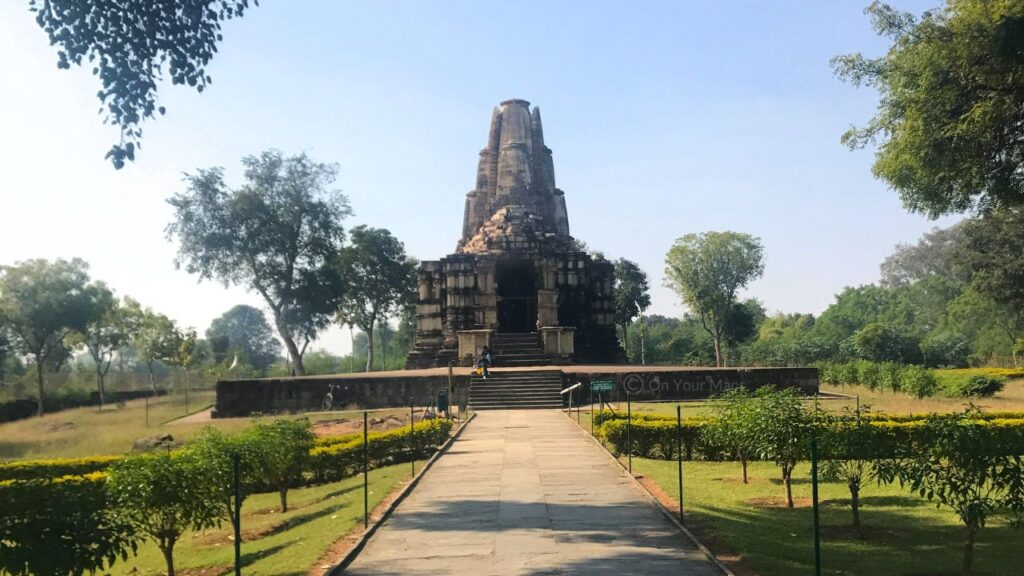
These temples are distantly located when compared to western and eastern temples, which is why they are less explored.
Southern group consists of three temples — Dulhadeo temple, Chaturbhuj Temple and Beejamadal Temple. The entry to these temples do not levy any fee, that’s also the reason why they are not adequately maintained.
These three temples are situated at a distance of a few kilometres from each other. So you must arrange your conveyance accordingly.
Many adventure enthusiasts visit the southern temples on rented bicycles. This is actually a very good idea, especially for foreigners, as the way to these temples passes through villages and farmlands, which can give international visitors a close peek inside the rural life of India.
Eastern group of temples
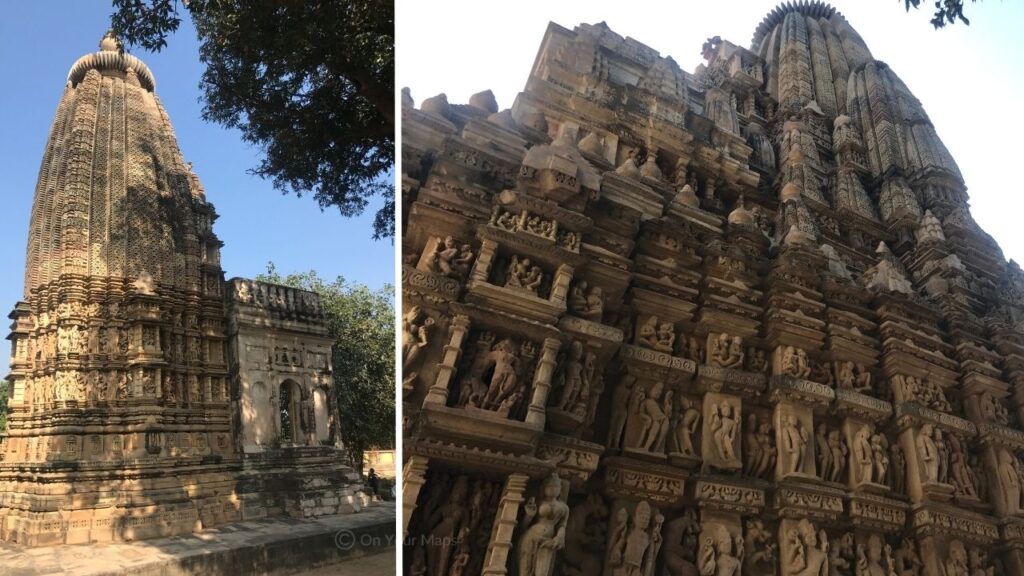
Eastern group of temples consist of Vamana temple, Brahma temple, Javari temple, Ghantai temple and the Jain temples.
Although scattered like the Southern temples, Eastern temples are comparatively more clustered as the temples are not very far from each other.
Since the majority of the footfall goes to the Western temples, the temples in the South and East are less crowded.
Done with the temple-hopping! Now here is a question that many visitors may ponder upon –
Do you have to visit all the temples in Khajuraho?
In a city full of temples, that is an ironic question to ask. Why would you want to skip temples when they are the primary attractions of Khajuraho?
My reasoning is that, as a layman, all the temples look broadly similar to each other. So if you have seen the western temples (which are the best of the lot), you wouldn’t stand at loss by missing out on temples in the south and east.
So I believe that if you are not an archaeology or mythology buff, it shouldn’t matter that you didn’t see all the temples.
I think you are covered on the temples’ front if you have ticked off western group of temples. The other two groups of temples i.e. eastern and southern, do not offer as pleasant an experience as the western complex does.
This is mainly because, unlike western temples, eastern and southern temples are not located in a single, beautiful premises. Rather they are scattered at distances, in plots of land that are often unguarded and unclean.
As I mentioned earlier in this travel blog, a bike trip around Eastern or Southern temple complexes could make for a great experience, if you are an adventure enthusiast wanting to have a taste of a bumpy ride on the kachcha roads of Indian countryside in and around Khajuraho.
If you are not seeking to tick off all the temples in Khajuraho just for the sake of it, I would recommend you just visit the Western temple complex. If you are too keen, then further visit either Eastern or Southern groups.
The point I am trying to convey in my travel blog is that visiting all the temples in Khajuraho can be avoided.
Don’t miss Panna Tiger Reserve
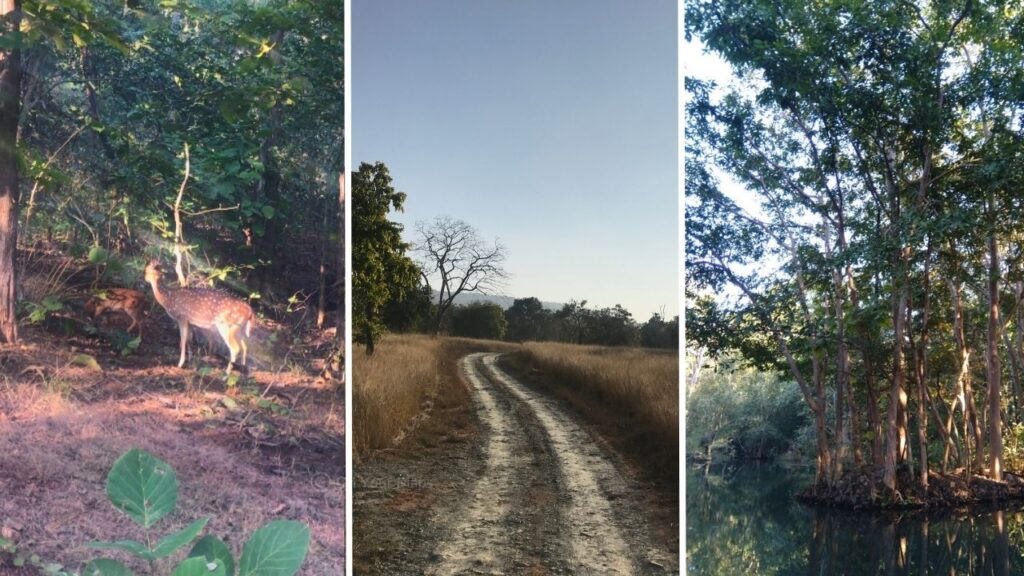
You cannot visit Madhya Pradesh and not go for a jungle safari!
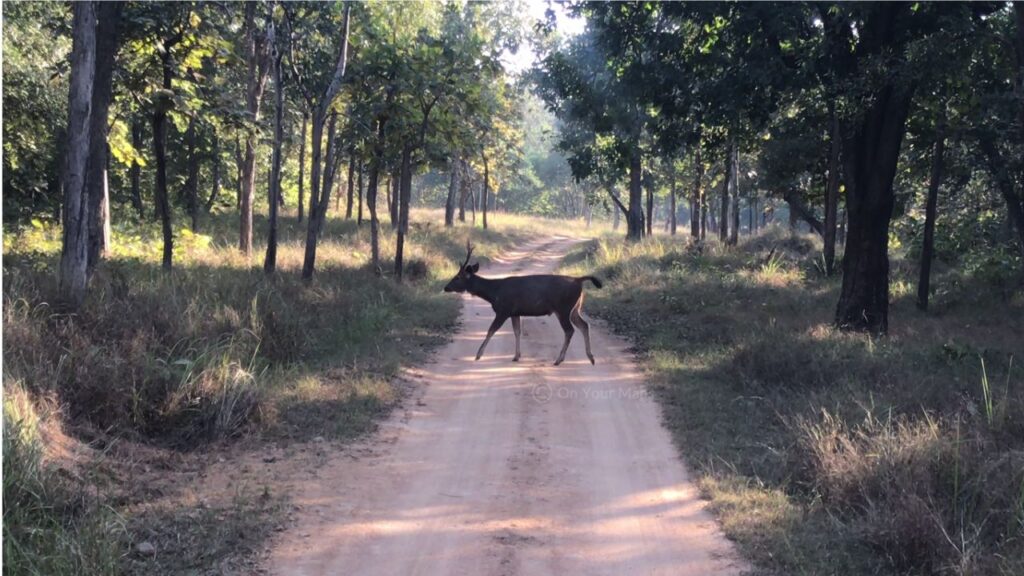
The state is blessed with some beautiful wildlife sanctuaries / national parks / tiger reserves and as home to the most number of tigers, it is known as the ‘Tiger state’ of India.
Panna Tiger Reserve or Panna National Park happens to be quite near to Khajuraho and is the second most popular attraction of the Khajuraho trip. (First obviously being the temples themselves)
The wildlife safari in Panna’s serene forests will be a refreshing experience. The added bonus? Being able to spot the elusive cat.
We were lucky to have got a glance of a Tigress, but many other jeeps in our batch could not. So a Tiger sighting is not guaranteed. But you will surely see some other wild animals in their natural habitat.
Honestly, don’t go there with high hopes of seeing a tiger. Go there to witness the mesmerising tranquillity of the jungle.
The total duration of the safari is about 2-3 hours. You can simply ask your hotel in Khajuraho to arrange the safari jeep and a registered safari jeep will pick you from the hotel.
The safari cost us about Rs 6000. This included pick and drop from our hotel, the entry fee to the tiger reserve, the guide fee and the driver’s charges.. This cost was divided among four of us friends.
Waterfalls in Khajuraho
After the temples and the safari, it is the waterfalls that are worth visiting in Khajuraho. However, the waterfalls there are best enjoyed in the months during and after the monsoon i.e. July, August and September. Largely, there are two popular waterfalls.
Pandav caves and fall
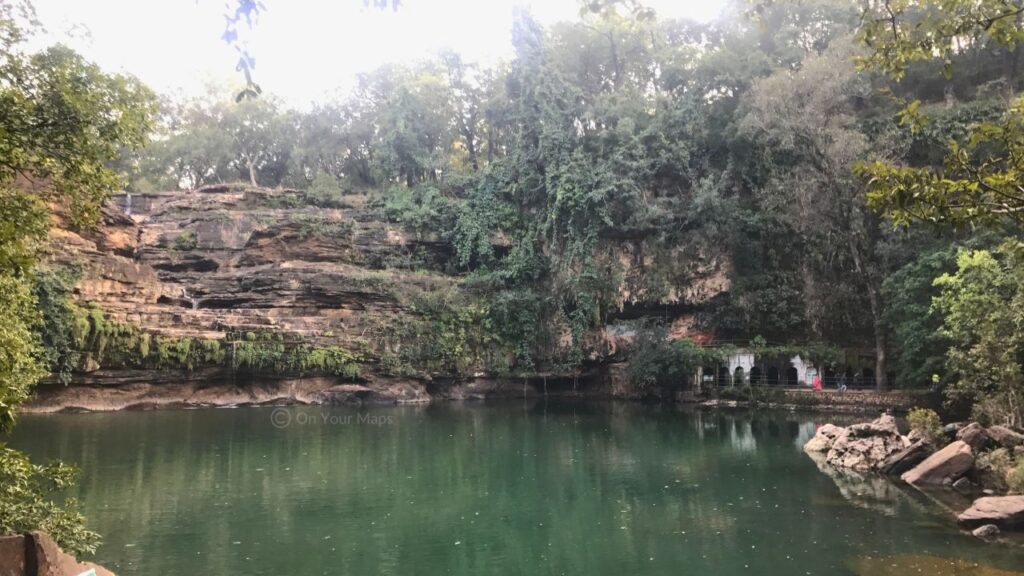
Pandav falls is situated some kilometres ahead of the Panna Tiger Reserve. The 30-metre waterfall lies on a tributary of the Ken River.
Although the water flow of the fall wasn’t that strong (maybe because we went there in December), the waterfall derives its uniqueness from the ancient caves that are hidden in the rocks behind the fall.
The name of the falls comes from the legendary Pandava brothers of the epic Mahabharata. It is believed that they had lived in these caves.
If you walk from the main gate to the waterfall site, a distance of about 700-800 metres, then the entry fee is Rs 25 per person. The fee goes up if you take your vehicle.
Total duration required for Pandav caves and waterfalls is about 30-60 minutes.
Raneh fall
Raneh is the more popular of the two falls. It is about 15 kilometres away from Khajuraho. The waterfall looks spectacular when it is in its full glory during the rainy season. However, when we visited Khajuraho in December, we were advised not to go there because there won’t be any water to see. So we didn’t go to Raneh falls, and therefore, I can’t give more details about it in this Khajuraho travel blog.
Ken river bank stone bridge or the stop dam
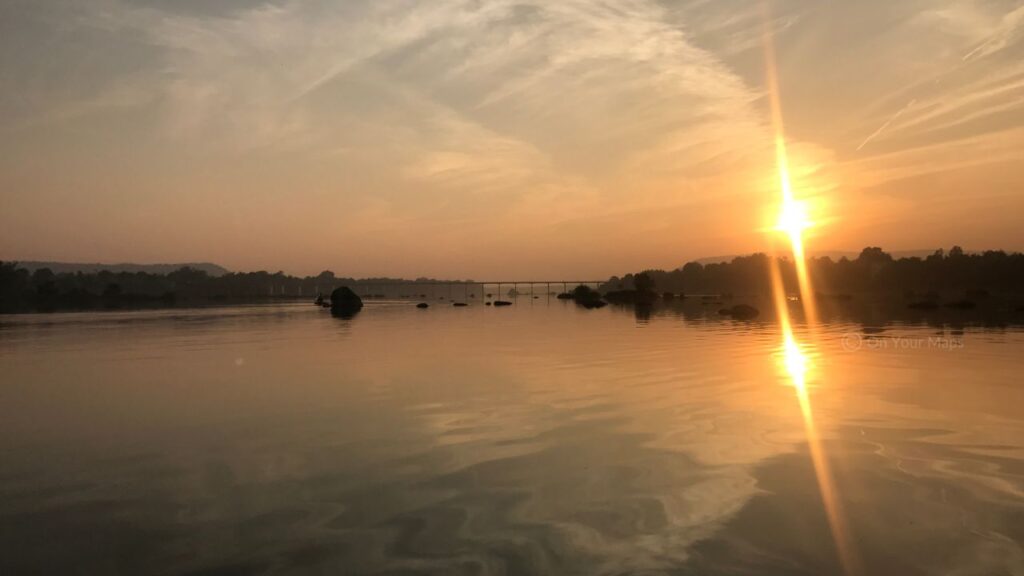
The stop dam at the Ken river was one of the most peaceful and beautiful sites that we visited on our trip. It is a lesser known attraction and we discovered it on our own.
This is located very close to the entry gate of Panna Tiger Reserve. There is a narrow bylane that cuts from the main highway. Just drive a few hundred metres on the kuchach road inside that bylane and you will reach the beauty.
The best time to visit the stop dam is during the sunset, when you can see the orange sky amalgamating with the waters of Ken and the reflection of the Khajuraho-Panna stone bridge in the river adding to the beauty.
Have a peaceful walk on the stop dam and marvel at the sunset.
This site, however, won’t be accessible in the monsoon due to the high water level.
Museums in Khajuraho
How can a historical destination like Khajuraho not have a museum? There are two museums that seek the interest of the tourists.
(Full disclosure: I didn’t visit any of the museums in Khajuraho, I am just mentioning them in my travel blog so that you don’t miss them.)
The Archeological Museum
The archeological museum of Khajuraho houses the ancient sculptures that were found in excavation in and around Khajuraho. Just like the carvings on the temples, the sculptures found in excavation are equally intricate.
It is located near the Matangeshwar temple in the complex of Western group of temples.
The museum is open from 08:00 AM to 5:00 PM on all days except for Friday. The entrance fee for Indian, SAARC & BIMSTEC Country Citizens is Rs 10 per person. The fee for citizens of other countries is Rs 250.
Adivart State Museum of Tribal and Folk Art
The Adivart State Museum of Tribal and Folk Art showcases a small but interesting collection of paintings, sculptures and artwork of the many indegenous tribal groups of Madhya Pradesh.
This museum is not so popular but as per the reviews on the internet, foreigners interested in Indian art seem to like the collection that it possesses.
It is located in the Chandela Cultural Complex, north-east of the Western group of temples.
Other than the above two museums, Sahu Shantiprasad Jain Kala Sangrahalaya, a museum dedicated to Jain religion’s history,is near the Eastern group of temples; and Dhubela Museum, housing artefacts related to Bundela Dynasty, is located on the Jhansi – Khajuraho road.
Khajuraho light and sound show
In the night, the Western group of temples are lit on with colourful lights, that play on with sound effects, music and the legendary voice of Amitabh Bachchan, to tell the story of Khajuraho’s temple. This is what the light and sound show is all about in Khajuraho.
We went to see the light and sound show with very high hopes, but came out utterly disappointed. Maybe, we didn’t like the story, or was it a poor presentation? I can’t quite recall, except for the fact that the majority of the audience along with us didn’t enjoy it.
The ticket to the light and sound show was Rs 250 per person for Indian visitors and Rs 700 per person for foreigners.
Here ends all the sightseeing! And now it is time to talk about food!
Places To Eat in Khajuraho
On the face of it, Khajuraho is a tiny rural town that isn’t expected to have great food. But due to its solid popularity as a tourist destination, Khajuraho also offers a good variety of food to cater to global visitors.
Apart from the restaurants of the high-end hotels, here are the local places to eat in Khajuraho:
Om Sai Ram Sweet House
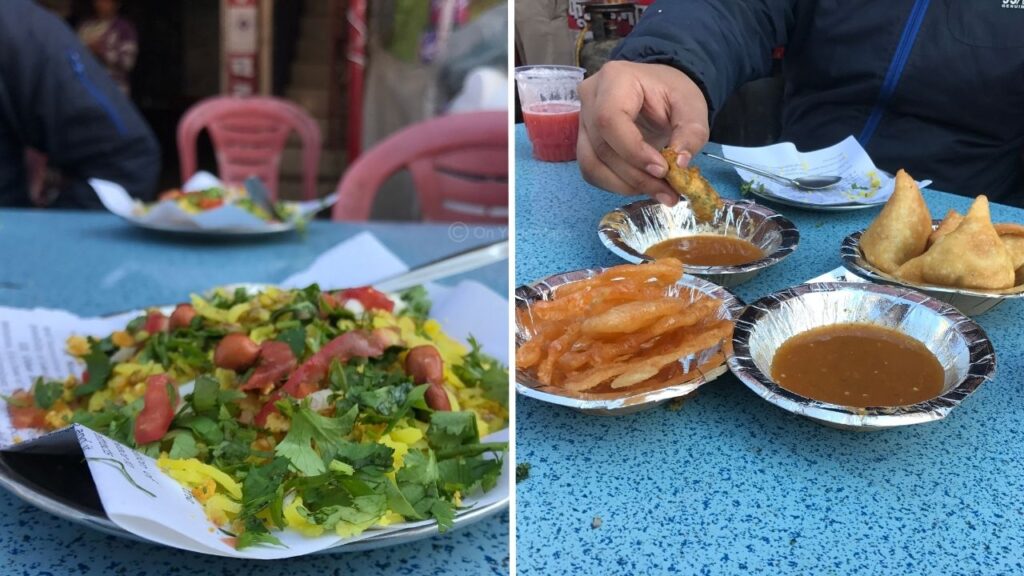
There can’t be a better place for breakfast in Khajuraho than this small snack corner, located in the middle of the main market. This shop serves fresh breakfast directly from its hot pan to your plate.
Items that we ate here are poha, samosa, bhajiya and jalebi. All of which were delicious, and really inexpensive.
Exact location: https://goo.gl/maps/WKKmqfa6dApqHJ94A
Raja Cafe
This is the uptown cafe that tourists often visit while visiting the Western temples.
More than the food, what makes Raja Cafe popular is its perfect location. Bang in front of the Western group of temples.
The food was decent, but the prices were on the higher end. Mostly suitable for those wanting to eat western food.
Agrawal Marwadi Bhojanalay
We visited this restaurant after a long and tiring day of sightseeing. And it turned out to be the perfect place to re-energise us with its fulfilling Indian thali.
It is located in the main market. Exact location: https://goo.gl/maps/bfhJm3y3nYgUZq9y5
Madras Coffee House
Run by a South Indian family, Madras Coffee House is the place to have authentic south Indian food in Khajuraho.
It is located right next to the ticket counter of Western temple complex. Exact location: https://goo.gl/maps/iPgnKTGDSSPsiL8a8
Dosa stall in the main market
There is an open area in the main market where dozens of food carts offer street food like pani-puri, chaat, patties, noodles etc. Among them is a stall that sells Idlis and Dosas. We really liked the dosas of that vendor.
Exact location: https://goo.gl/maps/EaeCRArWG3reCMhCA
All the above eating places are tried and tested by me. But you may yourself find some hidden food gems in Khajuraho. Also, when we visited in December 2020, Khajuraho wasn’t operating on its full-fledged scale due to COVID.
Ken River Lodge
This is not in Khajuraho, but near the Panna Tiger Reserve. Several people recommended visiting this spectacular restaurant built on a tree (also known as ‘tree house’). But unfortunately, I could not visit.
Therefore, I am listing it out here so that you visit this supposedly nice place set on the bank of Ken river.
What is the ideal range of budget for a three-day trip in Khajuraho?
We found Khajuraho to be an inexpensive place. An ideal destination for a budget trip.
You can get decent accommodation for Rs 1,000-2,000 per night. This will add up to Rs 2,000-4,000 for two nights for a three-day trip.
If you are travelling solo, then opting for a dorm in a hostel would be more cost effective than a hotel room.
Food is very reasonable too. You can have wholesome meals three times a day on a budget of just Rs 600 per day.
Ticket-wise, the major expenditure in my case was of the forest safari in Panna i.e. Rs 1,500. As specified earlier, the cost of one jeep was Rs 6,000 which was divided by four of us.
Other ticket prices include – Western temples: Rs 40, Pandav falls: Rs 100, Light and sound show: Rs 250.
Travelling within Khajuraho will require you to either hire a rickshaw or rent a two-wheeler, both of which will cost you around Rs 500-1,000.
All in all, the budget for a three-day trip in Khajuraho should be around Rs 6,000-7,000.
This travel blog does not include the cost of reaching Khajuraho, which will depend on the mode of transport and the distance of Khajuraho from your place.
What makes Khajuraho’s temples stand apart in a country dotted with temples?
In a country full of temples, why do Khajuraho’s temples stand apart? Apart from the intricate ancient stone carvings, I think the temples remind the now conservative society of how the expression of love and sex were so open in the bygone era.
Putting out such erotic carvings on public display is something almost unthinkable because of the reduced tolerance that our society has reached. It will be rejected for its ‘outrageous immodesty’.
But despite this, the temples in Khajuraho are visited by people from all walks of life – from families with small children to couples in their retirement. I guess, society accepts things when presented with the veil of heritage and history.